Pharma Manufacturing Market Set to Hit $1.2 Trillion by 2034

The global pharmaceutical manufacturing sector is positioned for substantial expansion over the next decade, with industry analysts projecting the market to reach $1.226 trillion by 2034, up from an estimated $684.88 billion in 2026. This represents a compound annual growth rate (CAGR) of 7.55%, signaling unprecedented investment in production capacity and infrastructure development across the pharmaceutical supply chain.
Unlike broader pharmaceutical sales projections, this manufacturing-specific forecast highlights the physical infrastructure and production capabilities being built to meet rising global demand for both traditional small-molecule drugs and increasingly complex biologics.
Manufacturing Capacity Expansion Accelerates
The nearly 80% growth projection for pharmaceutical manufacturing capacity reflects several converging industry trends. According to industry observers, companies are significantly expanding their production footprints to address supply chain vulnerabilities exposed during recent global health challenges and to accommodate the growing pipeline of biologic therapies requiring specialized manufacturing environments.
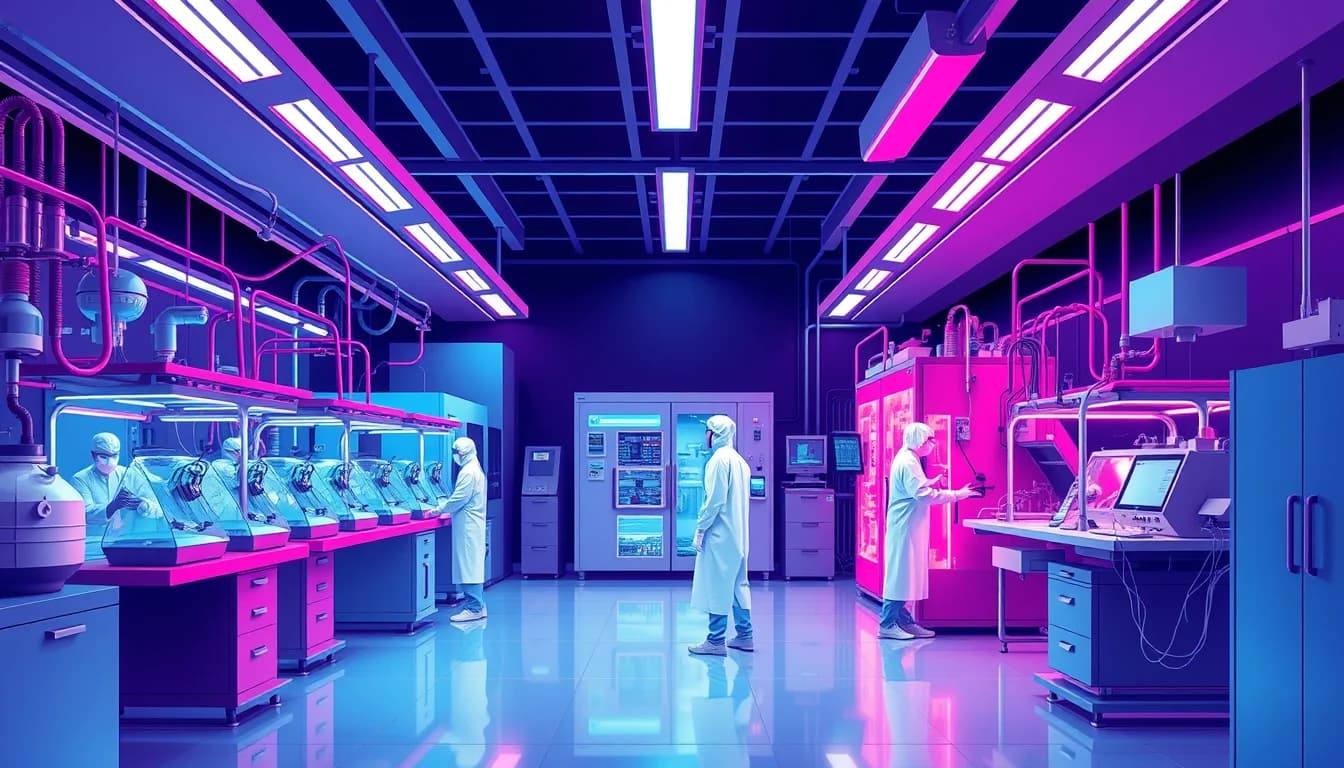
Manufacturing facility construction has surged in key markets including the United States, Europe, and emerging Asian economies. These investments span multiple production modalities, from traditional chemical synthesis plants to cutting-edge cell and gene therapy manufacturing suites equipped with single-use bioreactors and advanced process analytical technology.
The capital-intensive nature of pharmaceutical manufacturing means this growth represents hundreds of billions in facility construction, equipment procurement, and technology infrastructure. Industry analysts note that facilities for biologics manufacturing alone can require investments exceeding $500 million per site, with lead times of 4-6 years from groundbreaking to commercial production.
Biologics Drive Manufacturing Complexity
A significant portion of the projected manufacturing market expansion stems from the biologics revolution transforming pharmaceutical treatment paradigms. Key drivers include:
- Monoclonal antibody production: Requires dedicated cell culture facilities with stringent environmental controls and extensive purification systems
- Gene and cell therapies: Demand personalized manufacturing approaches with cleanroom environments and cold chain logistics
- mRNA platforms: Need specialized lipid nanoparticle formulation equipment and ultra-cold storage infrastructure
- Continuous manufacturing: Adoption of integrated, automated production lines replacing traditional batch processes
These advanced manufacturing modalities require substantially higher capital investment per production unit compared to traditional small-molecule pharmaceutical manufacturing. A single biologics production line may cost 5-10 times more than equivalent capacity for oral solid dose manufacturing.
Regional Manufacturing Hubs Emerge
The geographic distribution of pharmaceutical manufacturing investment is shifting as companies and governments prioritize supply chain resilience. According to market observers, North America and Europe continue to dominate high-value biologics production, while Asia-Pacific regions are capturing growing shares of active pharmaceutical ingredient (API) manufacturing and generic drug production.
Regulatory initiatives in multiple jurisdictions are encouraging domestic manufacturing capacity through tax incentives, expedited facility approvals, and public-private partnerships. The U.S. CHIPS and Science Act model is being replicated for pharmaceutical manufacturing in several countries, with governments offering substantial subsidies for domestic facility construction.
Contract manufacturing organizations (CMOs) and contract development and manufacturing organizations (CDMOs) represent a significant portion of the capacity expansion, as pharmaceutical companies increasingly outsource production to specialized partners. This trend allows smaller biotech firms to bring products to market without massive capital expenditures while enabling large pharmaceutical companies to maintain manufacturing flexibility.
Technology and Automation Investment
The manufacturing growth forecast incorporates substantial technology infrastructure investment beyond physical facilities. Process analytical technology, artificial intelligence for quality control, digital twins for process optimization, and advanced robotics are becoming standard features in modern pharmaceutical manufacturing environments.
These technology investments improve manufacturing efficiency, reduce batch failure rates, and enable real-time quality monitoring—all critical factors as regulatory agencies globally push for enhanced pharmaceutical quality through initiatives like ICH Q12 and Q13 guidelines focused on lifecycle management and continuous manufacturing.
Quality Assurance Implications
For consumers and healthcare providers, this manufacturing expansion has important quality implications. Patients can verify supplement and pharmaceutical quality using tools like PharmoniQ's Supplement Checker, which helps identify products manufactured according to rigorous quality standards.
The growth in manufacturing capacity should improve drug availability and potentially reduce supply disruptions that have plagued certain therapeutic categories in recent years. However, rapid expansion also requires robust quality systems to ensure new facilities meet the same exacting standards as established production sites.
Looking Ahead: Investment and Innovation
The path to $1.2 trillion in pharmaceutical manufacturing capacity by 2034 will require sustained investment, skilled workforce development, and continued regulatory evolution to accommodate novel manufacturing paradigms. Industry observers expect merger and acquisition activity to intensify as companies seek to rapidly acquire manufacturing capabilities rather than building from scratch.
For pharmaceutical companies, this manufacturing expansion represents both opportunity and competitive pressure. Organizations that successfully scale production while maintaining quality standards and controlling costs will be positioned to capture market share in an increasingly supply-constrained environment.
The manufacturing capacity buildup also reflects confidence in the pharmaceutical development pipeline, with companies betting that scientific innovation will continue delivering new therapies requiring production at scale. As personalized medicine advances, the industry faces the challenge of building flexible manufacturing systems capable of producing everything from blockbuster biologics to individualized cell therapies within the same facility ecosystem.
Check Your Supplement Interactions
Use our AI-powered checker to analyze supplement safety and interactions.
Open Interaction Checker →Comments (0)
This article is for informational purposes only and does not constitute medical or investment advice. It was written with AI assistance from the sources listed above. Check the original sources before relying on any detail.