China's Accelerated Drug Reviews Transform Global Pharma Strategy
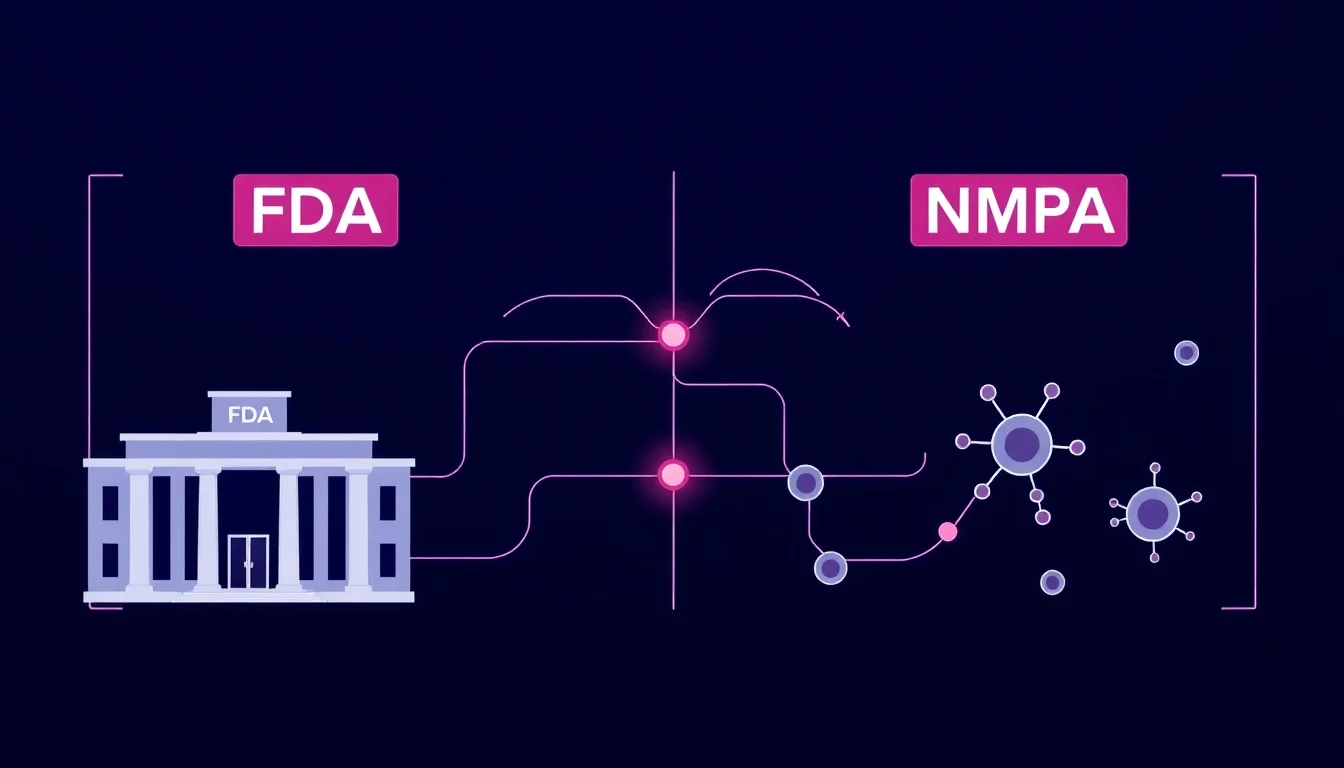
The global pharmaceutical industry is witnessing a fundamental realignment as China's accelerated drug review processes attract unprecedented investment from multinational corporations, signaling a shift in how and where companies develop new therapies. Major pharmaceutical players including Boehringer Ingelheim have publicly acknowledged leveraging China's streamlined regulatory pathways, marking what industry analysts describe as the emergence of a dual-hub innovation model that challenges decades of U.S. dominance in drug development.
This transformation represents more than incremental regulatory improvement—it reflects China's strategic positioning as a co-equal center of pharmaceutical innovation alongside the United States, with implications for where companies allocate R&D budgets, where they seek initial approvals, and ultimately how quickly new treatments reach global markets.
Regulatory Reforms Driving Industry Interest
China's National Medical Products Administration has implemented several key reforms over the past five years designed to accelerate drug approvals while maintaining safety standards. These changes include priority review designations for innovative therapies, conditional approval pathways for drugs addressing unmet medical needs, and acceptance of foreign clinical trial data to support domestic applications.
According to industry observers, review timelines for novel drugs have decreased significantly, with some innovative therapies receiving approval in timeframes competitive with the U.S. Food and Drug Administration and European Medicines Agency. This acceleration has coincided with China's broader push to transition from a generic drug market to an innovation-driven pharmaceutical ecosystem.
Key regulatory improvements attracting global interest include:
- Breakthrough therapy designation for drugs treating serious conditions with preliminary clinical evidence of substantial improvement over existing options
- Conditional approval pathways allowing earlier market access based on surrogate endpoints, with confirmatory studies required post-approval
- Rolling review processes enabling companies to submit application components as they become available rather than waiting for complete data packages
- Expanded acceptance of global clinical data reducing requirements for China-specific trials in certain circumstances
Strategic Implications for Global Pharmaceutical Companies
The shift toward China as a serious regulatory pathway is fundamentally altering corporate strategy at major pharmaceutical companies. Boehringer Ingelheim's public commentary on utilizing China's accelerated reviews reflects a broader industry recognition that dual-market strategies—pursuing approvals simultaneously in the U.S. and China—may become the new standard for global drug development.
This dual-hub approach carries several strategic advantages. Companies can potentially achieve faster time-to-market globally by leveraging whichever regulatory pathway proves faster for a given asset. Early approval in China's massive market of 1.4 billion people provides substantial commercial opportunities that can help fund further global development. Additionally, demonstrating safety and efficacy in diverse patient populations strengthens the overall evidence package for regulatory submissions elsewhere.
However, the strategy also introduces complexity. Companies must navigate two major regulatory systems with different data requirements, quality standards, and post-market obligations. Intellectual property protections, pricing negotiations with government authorities, and reimbursement pathways differ substantially between markets, requiring sophisticated corporate planning.
Impact on R&D Investment and Clinical Development
Perhaps most significantly, China's regulatory evolution is driving a reallocation of pharmaceutical R&D investment. Major companies are establishing or expanding research facilities in China, recruiting local scientific talent, and increasingly conducting early-phase clinical trials within the country. This represents a departure from the traditional model where early-stage development occurred primarily in the U.S. and Europe, with expansion to Asian markets only after initial approvals.
The shift is particularly pronounced in certain therapeutic areas. Oncology drug development has seen substantial China-focused investment, reflecting both the country's high cancer burden and its regulatory prioritization of innovative cancer therapies. Rare disease drug development has also benefited from China's orphan drug incentives, which mirror similar programs in the U.S. and Europe.
Industry analysts note that this R&D realignment may eventually influence which diseases receive research attention. As pharmaceutical companies design clinical programs to satisfy both U.S. and Chinese regulatory requirements simultaneously, therapies addressing health priorities shared by both markets may receive disproportionate investment compared to region-specific needs.
Looking Ahead: A New Era of Pharmaceutical Development
The emergence of China as a co-equal innovation hub alongside the United States marks a pivotal moment in pharmaceutical history. For decades, the U.S. regulatory pathway dominated global drug development strategy, with FDA approval serving as the gold standard that opened pathways to other markets. That unipolar model is rapidly giving way to a bipolar framework where China's regulatory decisions carry equivalent strategic weight.
This transformation will likely accelerate as China continues refining its regulatory infrastructure and as more companies successfully navigate dual-market strategies. Patients globally may ultimately benefit from increased competition, faster approvals, and greater diversity in clinical trial populations. However, the shift also introduces new complexities around data standards, regulatory harmonization, and ensuring that safety monitoring keeps pace with accelerated approvals.
For healthcare providers and patients evaluating new treatment options, understanding the regulatory pathways behind drug approvals becomes increasingly important. Tools like PharmoniQ's supplement and drug checker can help consumers verify the regulatory status and safety profiles of treatments approved through different pathways.
As this dual-hub model matures, the pharmaceutical industry's center of gravity is fundamentally shifting. Companies that successfully adapt to this new reality—building robust capabilities in both markets while maintaining rigorous safety standards—will likely emerge as the next generation of industry leaders.
Check Your Supplement Interactions
Use our AI-powered checker to analyze supplement safety and interactions.
Open Interaction Checker →Comments (0)
This article is for informational purposes only and does not constitute medical or investment advice. It was written with AI assistance from the sources listed above. Check the original sources before relying on any detail.