Blue Light Chemistry Breakthrough Promises Faster Drug Development
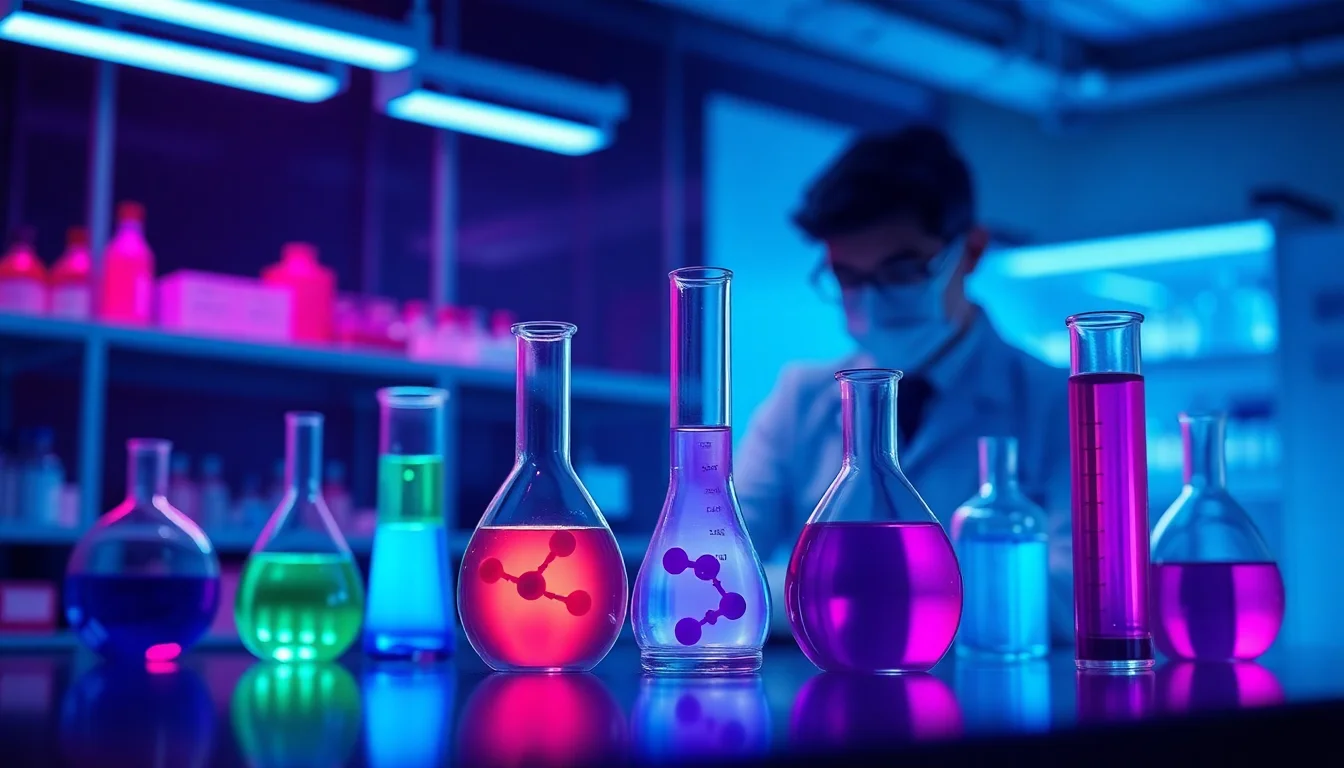
A significant advancement in pharmaceutical chemistry is poised to accelerate drug discovery timelines and reduce development costs. Researchers have unveiled a novel visible-light-driven synthetic method that allows chemists to construct complex drug-like molecules with considerably fewer steps than traditional approaches, according to recent findings in the field of photochemistry.
The breakthrough centers on harnessing blue light wavelengths to drive chemical reactions that traditionally required more elaborate multi-step processes. This innovation could fundamentally reshape how pharmaceutical companies approach the synthesis of novel therapeutic compounds, particularly in the early stages of drug discovery.
The Science Behind Light-Driven Synthesis
Traditional pharmaceutical synthesis often requires multiple reaction steps, each involving specific catalysts, extreme temperatures, or hazardous reagents. The new photochemical approach utilizes visible blue light—similar to LED wavelengths—to activate molecular transformations that would otherwise demand more complex conditions.
The method works by using photocatalysts that absorb blue light energy and transfer it to target molecules, enabling chemical bonds to form or break in highly controlled ways. This process offers several distinct advantages:
- Reduced step count: Complex molecules can be assembled in 3-5 steps instead of 8-12 traditional steps
- Milder conditions: Reactions proceed at room temperature rather than requiring heating or cooling
- Higher selectivity: Light activation provides precise control over which molecular bonds react
- Greener chemistry: Fewer solvents and reagents reduce waste and environmental impact
Industry analysts note that reducing synthetic steps doesn't just save time—it fundamentally improves the economics of drug development. Each eliminated step represents savings in materials, labor, purification processes, and quality control testing.
Implications for Drug Discovery Pipelines
The pharmaceutical industry has long grappled with the challenge of efficiently synthesizing diverse molecular libraries for screening against biological targets. According to industry observers, this visible-light methodology could significantly expand the chemical space accessible to medicinal chemists.
Small molecule drugs typically contain multiple interconnected ring structures and functional groups arranged in three-dimensional configurations. Creating these architectures with precision has historically required extensive synthetic planning and execution. The new photochemical approach enables chemists to forge these complex structures more directly, potentially unlocking molecular designs that were previously impractical to produce.
Several pharmaceutical companies have already expressed interest in integrating photochemical methods into their discovery platforms. The technology appears particularly promising for generating focused libraries of drug candidates targeting specific protein families, where subtle structural variations can dramatically impact biological activity.
For researchers evaluating supplement and drug interactions, this development could eventually lead to new therapeutic options with improved safety profiles and reduced off-target effects, as more precise synthesis enables better molecular optimization.
Technical Challenges and Scalability
While the laboratory-scale results show considerable promise, pharmaceutical experts caution that translating any new synthetic method to industrial-scale manufacturing presents challenges. Key considerations include:
Light penetration becomes more difficult in larger reaction vessels, potentially requiring specialized reactor designs. Additionally, photocatalysts must demonstrate stability through multiple reaction cycles to be economically viable at production scale. The pharmaceutical industry will need to develop robust processes that maintain the method's advantages while meeting stringent regulatory requirements for drug substance manufacturing.
Nevertheless, process chemistry specialists suggest that these hurdles are surmountable. Similar photochemical methods have successfully transitioned to commercial production in other chemical industries, providing a roadmap for pharmaceutical applications.
Looking Ahead: Transforming Medicinal Chemistry
The visible-light synthesis breakthrough represents more than an incremental improvement—it signals a potential paradigm shift in how pharmaceutical researchers approach molecular construction. As this technology matures and becomes integrated into standard medicinal chemistry workflows, several outcomes appear likely.
Development timelines for novel drug candidates could compress significantly, particularly in the lead optimization phase where chemists synthesize dozens of related compounds to refine therapeutic properties. Cost reductions may make it economically feasible to pursue therapeutic targets in smaller patient populations or rare diseases that currently lack treatment options.
Academic and industrial research groups are now racing to expand the scope of reactions accessible through visible-light activation. Future advances will likely focus on building even more complex molecular architectures and developing complementary methods for different classes of pharmaceutical compounds.
For drug developers working on next-generation therapeutics, this chemistry innovation offers a powerful new tool for translating biological insights into clinical candidates more rapidly and efficiently than ever before.
Check Your Supplement Interactions
Use our AI-powered checker to analyze supplement safety and interactions.
Open Interaction Checker →Comments (0)
This article is for informational purposes only and does not constitute medical or investment advice. It was written with AI assistance from the sources listed above. Check the original sources before relying on any detail.