AI Drug Screening Tools Show Critical Gaps in Clinical Testing
Recent clinical research has exposed significant limitations in artificial intelligence-based drug interaction screening tools, revealing a troubling disconnect between general AI performance and specialized clinical applications. While these systems demonstrate strong capabilities in retrieving basic pharmaceutical information, their ability to accurately identify potentially dangerous drug-drug interactions (DDIs) falls substantially short of clinical requirements, according to findings that are prompting reassessment of AI deployment in healthcare settings.
Performance Gap Raises Patient Safety Concerns
The research findings indicate that current AI models, including large language models (LLMs) that have shown promise in general medical knowledge tasks, exhibit critical deficiencies when tasked with the nuanced work of screening for drug-drug interactions. This specialized clinical function requires not just pharmaceutical knowledge but also the ability to assess interaction severity, timing, mechanism, and patient-specific risk factors—capabilities that appear beyond current AI systems' reliable performance threshold.
Drug-drug interactions represent a significant source of preventable adverse events in healthcare, with studies estimating that DDIs contribute to 20-30% of all adverse drug reactions. The stakes are particularly high as healthcare systems increasingly turn to AI-powered clinical decision support tools to manage complex medication regimens, especially for patients taking multiple concurrent medications.
According to analysts familiar with the research, the performance gap appears most pronounced in scenarios involving:
- Medications with narrow therapeutic windows requiring precise dosing adjustments
- Complex three-way or multi-drug interactions that extend beyond simple pairwise screening
- Patient-specific factors such as genetic polymorphisms affecting drug metabolism
- Emerging medications with limited post-market interaction data
- Interactions requiring clinical judgment about severity and management strategies
Industry Implications and Regulatory Considerations
The findings arrive at a critical juncture for the pharmaceutical and healthcare technology sectors. Multiple companies have launched or are developing AI-powered medication safety platforms, with some systems already deployed in clinical workflows. The research suggests these implementations may require additional validation layers and human oversight to ensure patient safety.
Regulatory bodies, including the FDA, have been developing frameworks for AI-based clinical decision support systems. These new findings are expected to inform ongoing policy discussions about validation requirements, performance benchmarks, and appropriate use cases for AI in medication management. Industry observers note that the research may prompt calls for more rigorous clinical testing protocols before AI screening tools receive regulatory clearance for high-stakes applications.
Healthcare institutions using AI-powered medication screening systems may need to reassess their deployment strategies. Many organizations have implemented these tools to address clinician burnout and alert fatigue from traditional rule-based systems, but the new research suggests that AI alternatives may not yet be ready to fully replace conventional approaches.
For patients managing multiple medications, tools like PharmoniQ's Drug Interaction Checker remain essential for understanding potential risks, though the latest findings underscore the importance of professional pharmacist review for comprehensive safety assessment.
Technical Challenges in DDI Detection
Experts note that drug-drug interaction screening presents unique challenges that distinguish it from general medical question-answering tasks. Unlike retrieving factual information about individual medications—where AI systems have shown strong performance—DDI screening requires:
Integration of multiple data sources: Effective screening must incorporate pharmacokinetic data, pharmacodynamic mechanisms, clinical case reports, and continuously updated post-market surveillance information. Current AI models appear to struggle with synthesizing these diverse information streams into accurate risk assessments.
Context-dependent judgment: The clinical significance of many drug interactions depends heavily on patient-specific factors including age, organ function, concurrent conditions, and genetic makeup. AI systems have demonstrated limited ability to appropriately weigh these contextual variables.
Severity classification: Not all interactions carry equal risk. Distinguishing between contraindicated combinations, interactions requiring dosage adjustment, and clinically insignificant theoretical interactions requires nuanced clinical reasoning that appears beyond current AI capabilities.
Looking Ahead: Hybrid Approaches and Continued Development
Rather than abandoning AI in medication safety applications, industry leaders are advocating for hybrid approaches that combine AI capabilities with traditional pharmacological databases and mandatory human expert review. This layered strategy could leverage AI's strengths in information retrieval and pattern recognition while relying on human judgment for final clinical decisions.
Pharmaceutical informatics researchers are also exploring specialized training approaches that might improve AI performance in DDI screening. These include fine-tuning models on curated interaction databases, incorporating structured pharmacological knowledge graphs, and developing AI architectures specifically designed for multi-drug analysis rather than adapting general-purpose language models.
The research findings serve as an important reminder that AI performance in one domain does not guarantee success in related but specialized clinical applications. As healthcare continues integrating AI tools, rigorous validation in specific use cases—rather than extrapolation from general performance—will be essential for ensuring patient safety.
For healthcare providers and patients alike, the message is clear: while AI shows promise as a supportive tool in medication management, comprehensive drug interaction screening still requires expert pharmacological knowledge and clinical judgment. Patients concerned about potential interactions should continue consulting healthcare professionals and can use preliminary screening tools like those available at PharmoniQ's supplement database as a starting point for informed discussions with their care teams.
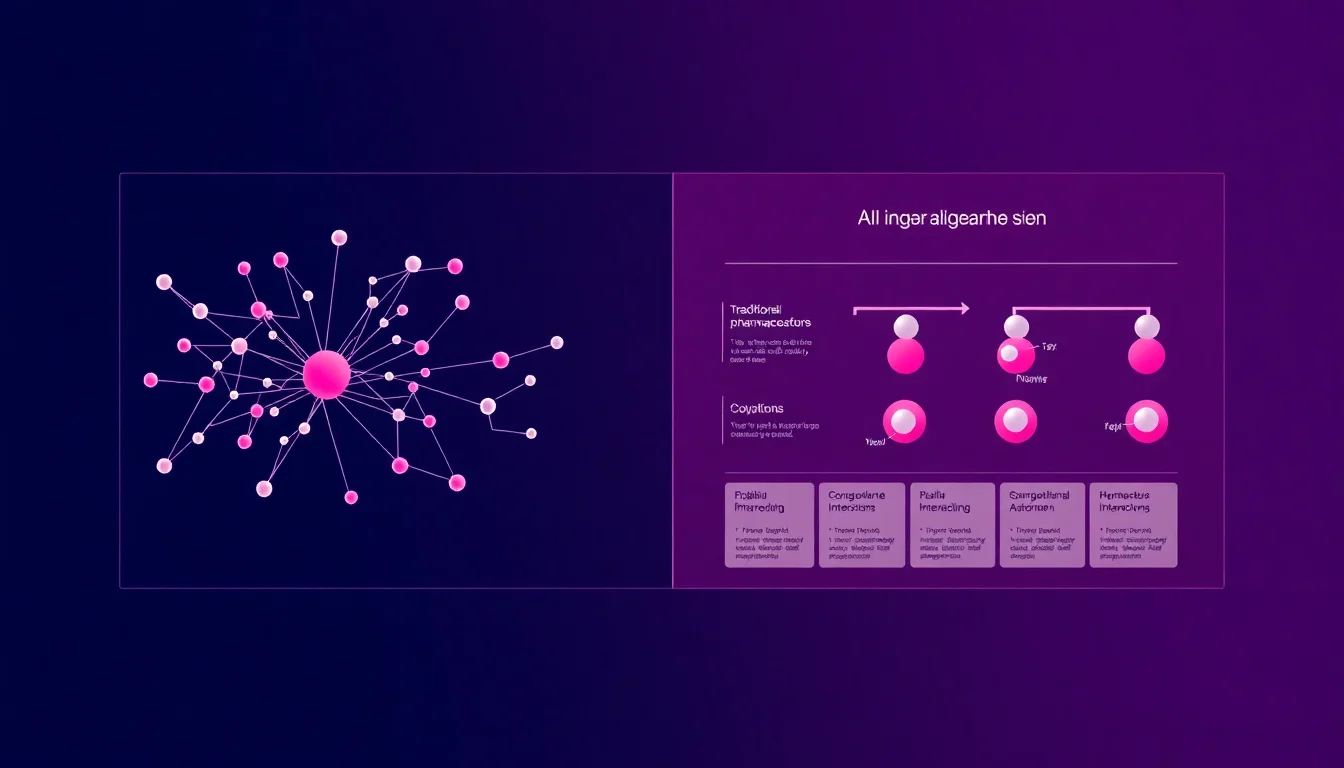
Check Your Supplement Interactions
Use our AI-powered checker to analyze supplement safety and interactions.
Open Interaction Checker →Comments (0)
This article is for informational purposes only and does not constitute medical or investment advice. It was written with AI assistance from the sources listed above. Check the original sources before relying on any detail.