Scaling Cell and Gene Therapy Manufacturing to Industrial Scale
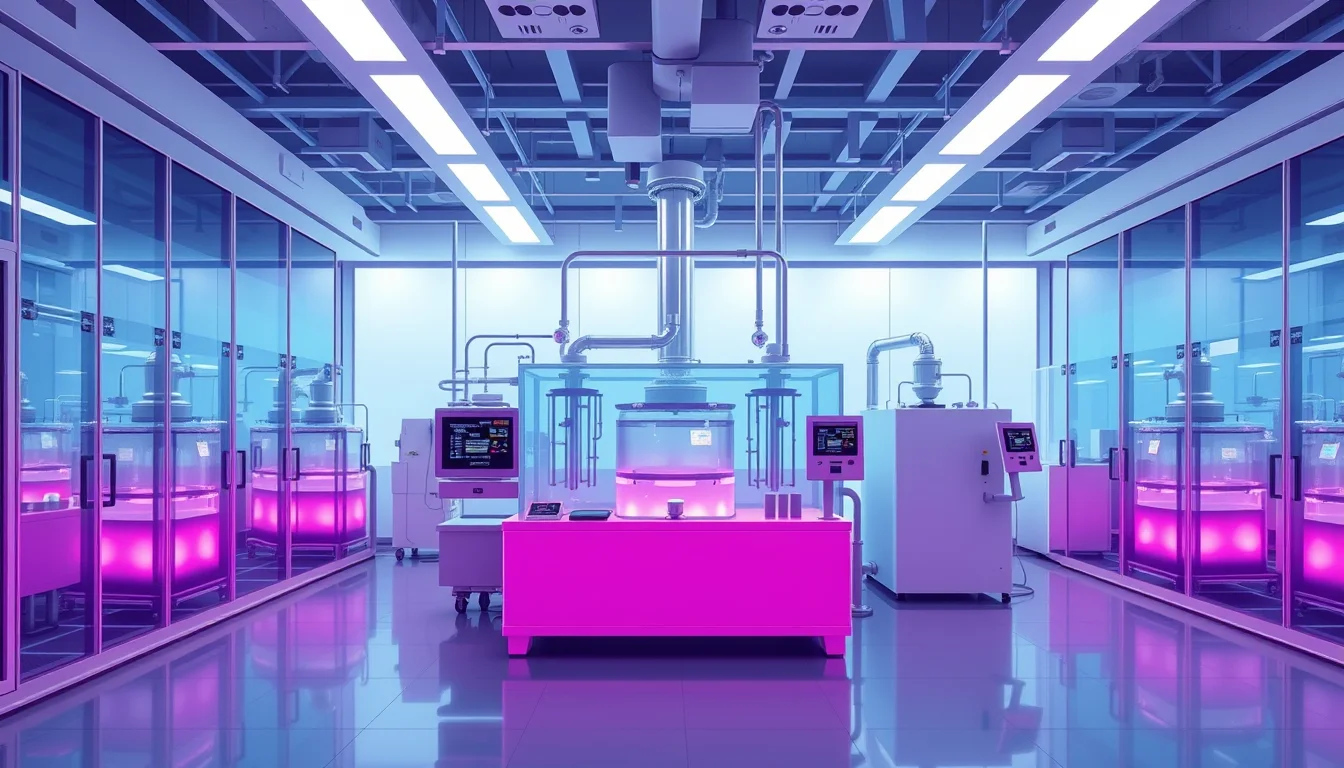
Cell and gene therapy (CGT) manufacturing is undergoing a fundamental shift from bespoke, manual processes to industrial-scale production. The driver is clear: a growing pipeline of late-stage programs, increasing commercialisation pressure, and the recognition that small-batch, operator-dependent methods cannot meet demand or deliver the cost structure the market requires. Investment in automation, digital infrastructure, and contract manufacturing capacity is accelerating across North America, Europe, and Asia-Pacific.
This transformation affects every function from research and development through to quality and business development. Teams evaluating in-house versus outsourced manufacturing, planning tech transfer, or preparing for scale-up need to understand how flexible regulation, new automation platforms, and CDMO partnerships are reshaping the production landscape.
Why the industry is racing to industrialise CGT production
For much of the past decade, advanced therapies were judged primarily on biological efficacy. That criterion alone is no longer sufficient. Manufacturing leaders, regulators, and health systems now demand a second test: can a CGT be produced reliably, repeatedly, and at a cadence and cost that supports routine patient access?
The expanding pipeline is intensifying this pressure. The global automated and closed cell therapy processing systems market size was valued at USD 1.6 billion in 2025 and is projected to grow from USD 1.9 billion in 2026 to USD 7.4 billion by 2033, at a compound annual growth rate of 20.7% from 2026 to 2033[1]. This growth reflects the broadening pipeline of CAR-T, natural killer cell, T-cell receptor-based, and emerging allogeneic modalities, each requiring scalable, high-throughput manufacturing systems[1]. As more programmes advance into clinical development, developers face rising pressure to enhance production capacity while maintaining strict quality and regulatory standards[1].
Autologous therapies, which require individualised processing for each patient, amplify strain on manual and semi-automated workflows[1]. Traditional processes prove insufficient for meeting accelerated timelines, reproducibility expectations, and the higher throughput required as the market expands[1]. Meanwhile, the shift toward allogeneic, "off-the-shelf" cell therapies is reshaping production strategies and driving demand for systems that can support true industrial-scale manufacturing[1].
Manufacturing complexity remains a central barrier. Developers struggle with small batch sizes, limited analytical tools, and constrained viral vector supply chains that hinder manufacturing at scale[2]. Variability in starting materials continues to be one of the largest obstacles to consistent manufacturing, impacting both the quality and potency of the final product[2]. Regulatory fragmentation across regions complicates development plans and increases time and cost[2]. In parallel, the infrastructure required to administer these therapies, specialised facilities, trained personnel, and data systems, remains limited, particularly in lower-income settings or countries with emerging healthcare systems[2].
What the regulatory data shows
US and international regulators have responded to the sector's manufacturing challenges with a series of flexibilities designed to expedite development without compromising quality. On 11 January 2026, the US Food and Drug Administration (FDA) announced information about the agency's flexible approach to overseeing chemistry, manufacturing, and control (CMC) requirements for CGT[3]. The agency stated that its more flexible approach has been, and is expected to continue to be, helpful in expediting product development and will guide the FDA's evaluation of development strategies in preparation for a Biologics License Application (BLA) submission[3].
In May 2026, FDA released a final guidance document with immediate effect advising sponsors on CMC flexibilities for CGT products developed for BLAs[4]. The document acknowledged that it can be difficult for sponsors to create CGT products using "traditional product development strategies" due to factors such as the complexity of the product and process, individualised manufacturing needs, small patient populations, fewer manufacturing runs, and shorter product shelf lives[4].
Clinical development flexibilities
Before an investigational product is manufactured for phase 2 or 3 trials, the manufacturer will not be expected to comply with 21 CFR part 211[3]. The FDA reviews process and method validation consistent with a product lifecycle approach, understanding that process and method validation approaches are refined over time[3]. As final specifications for the drug substance and drug product are not expected until the end of the investigational process, investigational new drug applications (INDs) may provide for permissive product quality release acceptance criteria in investigational studies consistent with the quality requirements for products used in investigational studies[3].
As sponsors move from phase 1 to studies designed to establish efficacy for licensure, the Center for Biologics Evaluation and Research (CBER) will allow minor manufacturing changes supported by data showing the comparability of the pre-change and post-change product without expecting overly stringent and onerous comparability data[3].
Commercial specifications flexibilities
The FDA's approach is based on the need to ensure product quality and compliance while also recognising that the small patient populations targeted by CGT therapies do not necessarily allow for a large number of manufacturing lots to support the product release specifications[3]. CBER will consider, where appropriate, flexibility in establishing product release specifications in the review of CGT BLAs, consistent with the nature of the product and process and when appropriately justified[3]. CBER will consider submissions seeking to re-evaluate and revise product release acceptance criteria based on post-approval manufacturing experience, when manufacturers demonstrate consistent product quality[3].
Process validation flexibilities
There may be situations when specific Process Performance Qualification (PPQ) lots can be designed by batch for release and distribution before protocol execution steps are completed (concurrent release)[3]. There is no requirement to supply three PPQ lots for process validation[3]. FDA's review may consider whether PPQ protocols justify the appropriate number of lots based on overall process understanding[3].
Ben Beneski, senior vice president and chief technical officer at Allogene Therapeutics, said he thinks the final guidance would be "really helpful in real-world situations" where products have limited engineering runs or datasets[4]. He noted that specifications based on clinical experience generated with a small number of batches may not reflect the full variability of the process[4]. "Having a lifecycle approach to being able to consider adjusting or resetting those specifications as more data becomes available is a really important area of flexibility," he said[4].
Technologies enabling the shift to industrial scale
Automation and closed systems are central to the industrialisation agenda. The growing integration of software technologies and advanced therapy development processes is expected to drive market growth[1]. Rising investments by biomanufacturers for developing cellular therapy products through rounds of series funding are anticipated to offer lucrative growth opportunities[1]. The increasing demand for scalable, safe, and contamination-free cell therapy manufacturing solutions, highlighted by innovations such as animal origin-free formulations, is driving the market's growth[1].
Closed automation platforms
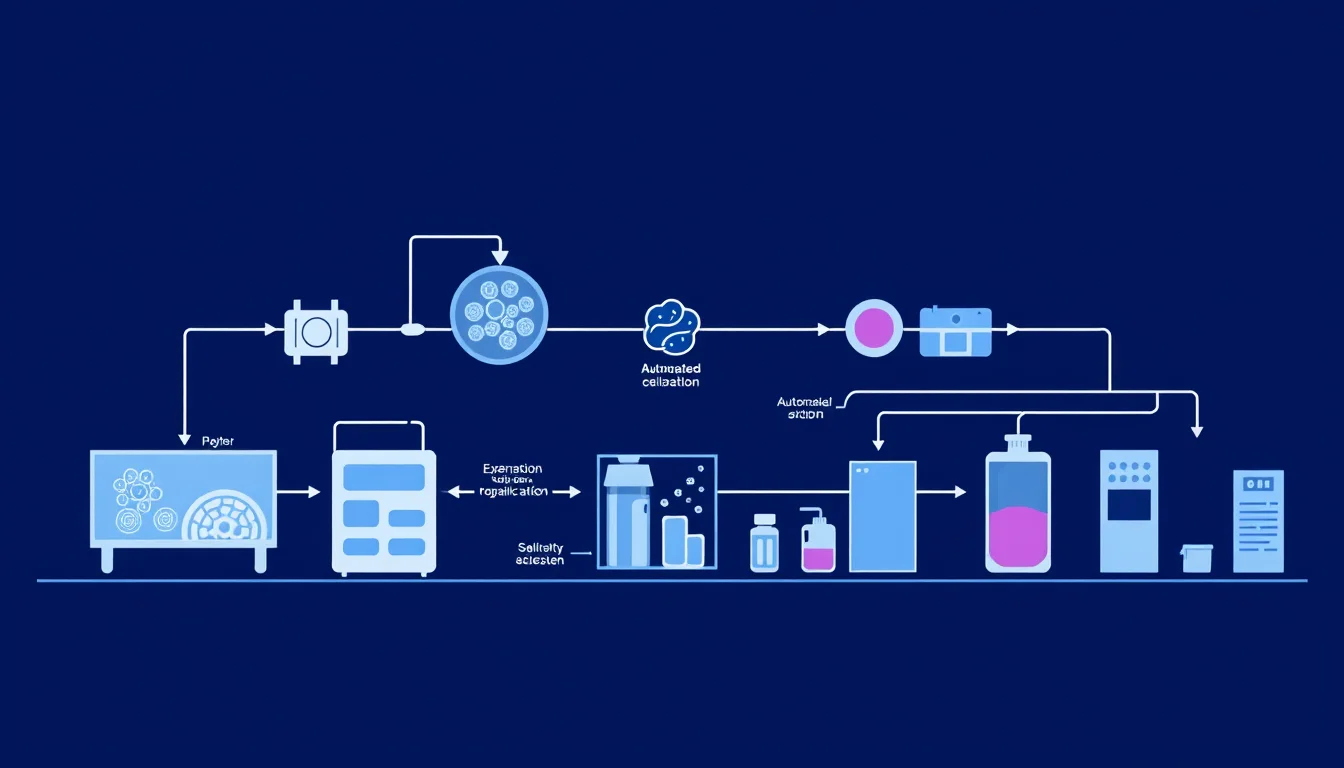
Automated platforms that integrate cell isolation, activation, expansion, and formulation steps are becoming essential for reducing cycle times and ensuring consistent product quality[1]. In the automated and closed cell therapy processing systems market, the separation services segment held the largest market share of 31.72% in 2025[1]. The non-stem cell therapy segment held the largest market share overall[1]. The pre-commercial and research and development scale segment held the largest market share in 2025, reflecting the maturity stage of many programmes[1].
Conference insights from the Advanced Therapies USA conference in Philadelphia in November 2025 highlighted a focus on reducing operational complexity while improving reproducibility through consolidated unit operations, modular closed workflows, and digital quality systems[5]. Takeaways from the conference suggest that 2026 will reward programmes that build repeatability early rather than retrofit it late[5].
Digital manufacturing and artificial intelligence
Digital technologies are transforming how cell therapies are developed and manufactured, enabling greater efficiency, consistency, and scalability while maintaining the highest quality standards[6]. On 6 October 2026, RoslinCT, a leading global cell therapy contract development and manufacturing organisation (CDMO), announced it had been awarded a research and development grant from Scottish Enterprise of up to £7.25 million to accelerate the digital transformation of its manufacturing operations in Scotland[6].
The funding forms part of RoslinCT's ambitious digital expansion plan, a multi-year initiative designed to enhance the company's integrated digital and AI capabilities and further strengthen Scotland's position as a global hub for advanced cell and gene therapy manufacturing[6]. The programme will enable the development of a digitally integrated manufacturing environment, improving operational efficiency, data connectivity, and manufacturing excellence across RoslinCT's operations[6].
Peter Coleman, Chief Executive Officer of RoslinCT, stated: "Digital technologies are transforming how cell therapies are developed and manufactured, enabling greater efficiency, consistency and scalability while maintaining the highest quality standards. At RoslinCT, we are committed to building world-class manufacturing capabilities that help our clients bring innovative therapies to patients faster. This programme will strengthen our digital infrastructure, support continued innovation and reinforce Scotland's position as a leading destination for cell and gene therapy manufacturing."[6]
Process analytical technology and real-time release
Leveraging tools such as Process Analytical Technology (PAT) enables real-time monitoring and control of manufacturing steps, helping ensure the consistency and quality of complex CGT products[2]. PAT, AI-driven modelling, and automation could improve both scalability and regulatory confidence[2]. Examples from the Foundation for the National Institutes of Health and others demonstrated how early establishment of good manufacturing practice (GMP) cell banks, starting with high-quality research-grade plasmids, can lay a foundation for later phases, supporting faster transitions and cost-effective scaling[2].
The evolving CDMO landscape
The growth of CDMOs and contract research organisations (CROs), driven by rising outsourcing of cell therapy development and manufacturing, is creating strong demand for turnkey automated systems[1]. As developers prioritise speed-to-market and flexible capacity, service providers are expanding their infrastructure and seeking platforms that support standardised, reproducible, and GMP-compliant production[1]. Automated and closed systems enable CDMOs to manage diverse client portfolios, minimise operator dependency, and deliver consistent product quality across multiple therapy programmes[1].
Simultaneously, increasing global investment in biomanufacturing facilities is accelerating the adoption of integrated, ready-to-deploy automation solutions[1]. RoslinCT operates 22 purpose-built cGMP cell therapy suites across sites in Edinburgh, Scotland, and Hopkinton, Massachusetts, providing process and analytical development, clinical and commercial manufacturing for autologous and allogeneic cell therapies, as well as induced pluripotent stem cell line development, gene editing, and differentiation services[6].
Geographic distribution is also expanding. North America dominated the automated and closed cell therapy processing systems market with a revenue share of 50.1% in 2025, but Asia-Pacific is forecast to be the fastest-growing regional market from 2026 to 2033[1]. In the US, the market held the largest share in 2025[1].
What it means for people in the industry
The shift to industrial-scale CGT manufacturing creates specific implications for R&D, CMC, manufacturing, quality, regulatory, and business development teams.
For R&D scientists
Manufacturability must be considered early in programme design. The traditional sequence of establishing proof of concept first, then addressing manufacturing, is giving way to integrated strategies in which process development begins in parallel with lead candidate selection. Platforms that rely on complex culture media, extensive ex vivo manipulation, or unstable intermediates will face higher hurdles during scale-up. Dialogue with CMC and manufacturing counterparts during research stages can identify and mitigate these risks before they become costly bottlenecks.
For CMC leads
The lifecycle approach to CMC outlined in FDA guidance creates new opportunities but also demands careful documentation of rationale and risk[3][4]. Concurrent process validation during trials could overcome the bottleneck of transferring research-grade materials to GMP-grade for clinical trials, a process that is currently very time- and resource-intensive[2]. Stronger donor selection and cell source characterisation criteria can improve product consistency and potency, though these materials remain difficult to manufacture at scale[2]. Professionals in the field are eager to work on rightsizing CMC requirements to avoid repeated testing for every small patient population[2].
For manufacturing directors
Capacity planning now requires balancing in-house investment against CDMO partnerships. The growth of service providers offering integrated automation platforms means that building internal manufacturing infrastructure is no longer the only credible path to commercial supply. However, reliance on external capacity introduces coordination complexity and potential supply chain risk. Manufacturing leaders should assess whether their programmes benefit from dedicated in-house suites or flexible access to shared CDMO capacity, and at what stage that decision needs to be locked in.
For quality professionals
Quality systems must adapt to risk-based validation approaches, alternative analytical methods, and potentially smaller reserve sample volumes[4]. FDA's flexibility in establishing product release specifications and allowing lifecycle adjustments to acceptance criteria based on post-approval manufacturing experience requires quality teams to implement robust data collection and trending systems from early clinical phases[3][4]. Real-time release testing and PAT integration demand new competencies in data integrity, electronic batch records, and continuous process verification.
For regulatory affairs
FDA is cognisant of the rapid pace of scientific advancements related to the development and manufacturing of CGT products, and encourages sponsors with questions about CMC requirements to consult with review divisions throughout the product development process[3]. Early engagement with regulators to discuss phase-appropriate CGMP strategies, comparability study designs, and specification-setting rationale can prevent late-stage surprises. An Advanced Therapy Medicinal Product (ATMP) comparability annex to ICH Q5E was recently endorsed by the ICH Assembly, though the expert working group is yet to be formed and the annex remains in the early stages of development[2].
For business development teams
The economics of CGT manufacturing are shifting as automation reduces per-batch costs and increases throughput. Licensing and partnership discussions increasingly include terms related to manufacturing strategy, CDMO selection, and technology platform access. Business development professionals should understand how manufacturing readiness affects valuation, milestone structures, and commercialisation timelines. The ability to demonstrate a credible path to industrial-scale production is becoming a competitive differentiator in deal-making.
Challenges that remain
Despite progress, significant challenges persist. Variability in starting materials continues to be one of the largest obstacles to consistent manufacturing, impacting both the quality and potency of the final product[2]. Different cell sources, oncology cells, induced pluripotent stem cells, allogeneic, and universal donor cells, require unique selection and modification criteria, so sequencing and full genomic characterisation are becoming increasingly important, particularly when a single donor's material is used for hundreds of patients[2].
Comparability remains a regulatory linchpin[2]. Even with the flexible approaches outlined in FDA guidance, demonstrating that a pre-change and post-change product are comparable requires analytical methods that are still maturing in many cases. The field would benefit from clearer guidance on when and how alternative validation and risk-based approaches can be applied, and what constitutes "good enough" comparability for small patient populations, including individualised (n = 1) therapies[2].
Infrastructure for administering therapies, specialised facilities, trained personnel, and data systems, remains limited, particularly in lower-income settings or countries with emerging healthcare systems[2]. Even as manufacturing capacity expands, patient access depends on coordinated investment across the entire delivery chain, from production through to point of care.
The path forward
The industrialisation of CGT manufacturing is not a distant goal; it is underway. The convergence of flexible regulation, automated closed systems, digital manufacturing infrastructure, and expanding CDMO capacity is creating the conditions for sustainable commercial production. Programmes that integrate manufacturing readiness into early development, leverage platform technologies, and engage regulators proactively will be best positioned to navigate the transition from bespoke to industrial scale.
For teams working on or considering cell and gene therapy programmes, the evolving production landscape demands attention now. Manufacturing strategy is no longer a downstream concern to be addressed after clinical proof of concept. It is a core determinant of programme success, influencing timelines, costs, regulatory pathways, and ultimately patient access. The organisations that recognise this shift and act accordingly will define the next generation of advanced therapies.
Key takeaways
- Cell and gene therapy manufacturing is transitioning from manual, small-batch processes to industrial-scale production driven by a growing late-stage pipeline, commercialisation pressure, and the need for sustainable cost structures.
- US FDA guidance released in January and May 2026 provides significant CMC flexibilities including phase-appropriate CGMP expectations, lifecycle approaches to specifications, concurrent process validation, and reduced PPQ batch requirements tailored to small patient populations.
- The global automated and closed cell therapy processing systems market is projected to grow from USD 1.9 billion in 2026 to USD 7.4 billion by 2033 at a 20.7% CAGR from 2026 to 2033, reflecting investment in platforms that integrate isolation, expansion, and formulation steps.
- Digital manufacturing and AI integration are transforming production environments, with leading CDMOs investing in data connectivity, real-time quality systems, and digitally integrated workflows to support both clinical and commercial manufacturing.
- CDMO expansion is accelerating as developers prioritise speed-to-market and flexible capacity, with automated systems enabling service providers to manage diverse portfolios, minimise operator dependency, and deliver consistent product quality.
- Manufacturing readiness must be integrated early in programme development, with R&D, CMC, manufacturing, quality, regulatory, and business development teams collaborating to ensure scalable, repeatable processes that support regulatory approval and commercial viability.
- Variability in starting materials, comparability study design, and infrastructure for therapy delivery remain significant challenges requiring continued investment in analytical methods, donor characterisation, and coordinated development across the production and care continuum.
References
- Automated & Closed Cell Therapy Processing Systems Market Report. grandviewresearch.com, Jun 15, 2026.
- The Pitfalls and Promise of Cell and Gene Therapy Development: A Time for Concerted Action. globalforum.diaglobal.org, Nov 13, 2025.
- Flexible Requirements for Cell and Gene Therapies to Advance Innovation. fda.gov, Jan 11, 2026.
- FDA finalizes guidance on CMC flexibilities for cell and gene therapies. raps.org, May 8, 2026.
- Industrialization for CGT Scalability: Highlights from the Advanced Therapies USA Conference. bioprocessintl.com, May 12, 2026.
- RoslinCT Awarded £7.25 million Scottish Enterprise R&D. biospace.com, Oct 6, 2026.
Check Your Supplement Interactions
Use our AI-powered interaction checker to analyze your full supplement stack for safety, timing conflicts, and synergies.
PharmoniQ Editorial
Expert pharmaceutical content powered by AI and curated by industry professionals. Our team combines pharmaceutical science, clinical research, and data analytics to deliver accurate, evidence-based supplement information.
Building a Supplement Stack?
Get personalized workout plans that pair perfectly with your supplements. FitFixLife helps you train smarter.
Visit FitFixLife →Related Articles

The Future of Personalized Supplement Recommendations: AI, Genomics, and Precision Nutrition
Explore how AI, genomics, and precision nutrition are revolutionizing personalized supplement recommendations for optimized health outcomes in 2024 and beyond.

Supplement Industry Trends: Direct-to-Consumer Brands in 2026
Explore how DTC supplement brands are reshaping the industry in 2026 with personalization, transparency, and technology-driven consumer experiences.

How AI is Transforming Pharmaceutical Quality Control
Discover how artificial intelligence is revolutionizing pharmaceutical quality control through predictive analytics, automated inspections, and real-time monitoring.
Comments (0)
Note: This article is general information, not medical, legal, regulatory or investment advice. Facts come from the sources in the reference list. Check the original source before relying on any detail.