Common Timing Mistakes When Taking Multiple Supplements Together
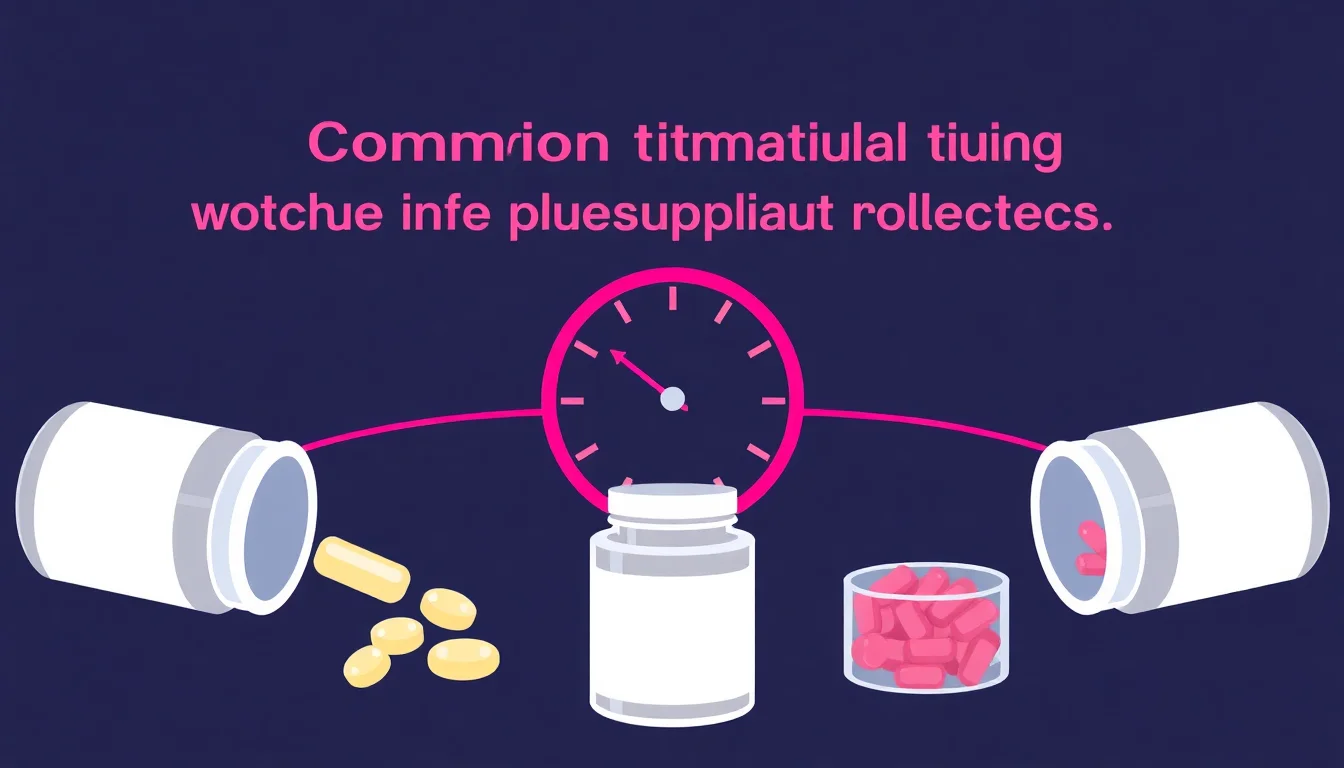
Why Supplement Timing Matters
Taking multiple supplements has become increasingly common, with studies showing that over 50% of adults use two or more dietary supplements regularly. However, improper timing can significantly reduce their effectiveness or increase the risk of adverse interactions.
Most Common Timing Mistakes
Taking all supplements at once is the most prevalent error. Many people consume their entire supplement regimen with breakfast for convenience, but this approach can lead to competition for absorption. Fat-soluble vitamins (A, D, E, K) may interfere with each other when taken simultaneously, while minerals like calcium, magnesium, and zinc compete for the same absorption pathways.
Ignoring food requirements represents another critical mistake. Some supplements, including curcumin and CoQ10, require dietary fat for optimal absorption, while others like iron work best on an empty stomach. Taking them at the wrong time relative to meals can reduce bioavailability by up to 70%.
Problematic Combinations
- Calcium and iron: Calcium significantly impairs iron absorption when taken together
- Magnesium and zinc: High doses of these minerals compete for absorption
- Fat-soluble vitamins together: Can overwhelm absorption mechanisms
- Multivitamins with specialized supplements: May provide excessive amounts of certain nutrients
Optimizing Your Schedule
Experts recommend spacing supplements at least 2-3 hours apart when possible. Morning typically works well for B vitamins and vitamin D, while magnesium is better taken in the evening due to its calming properties. Use our interaction checker to create a personalized supplement schedule that maximizes benefits while minimizing timing conflicts.
Always consult healthcare providers before starting new supplement regimens, especially when taking medications or managing health conditions.
Check Your Supplement Interactions
Use our AI-powered checker to analyze supplement safety and interactions.
Open Interaction Checker →Comments (0)
This article is for informational purposes only and does not constitute medical or investment advice. Content is generated with AI assistance and reviewed for accuracy.